30 September 2026
William Irons and the Anthropology of the Yomut Turkmen
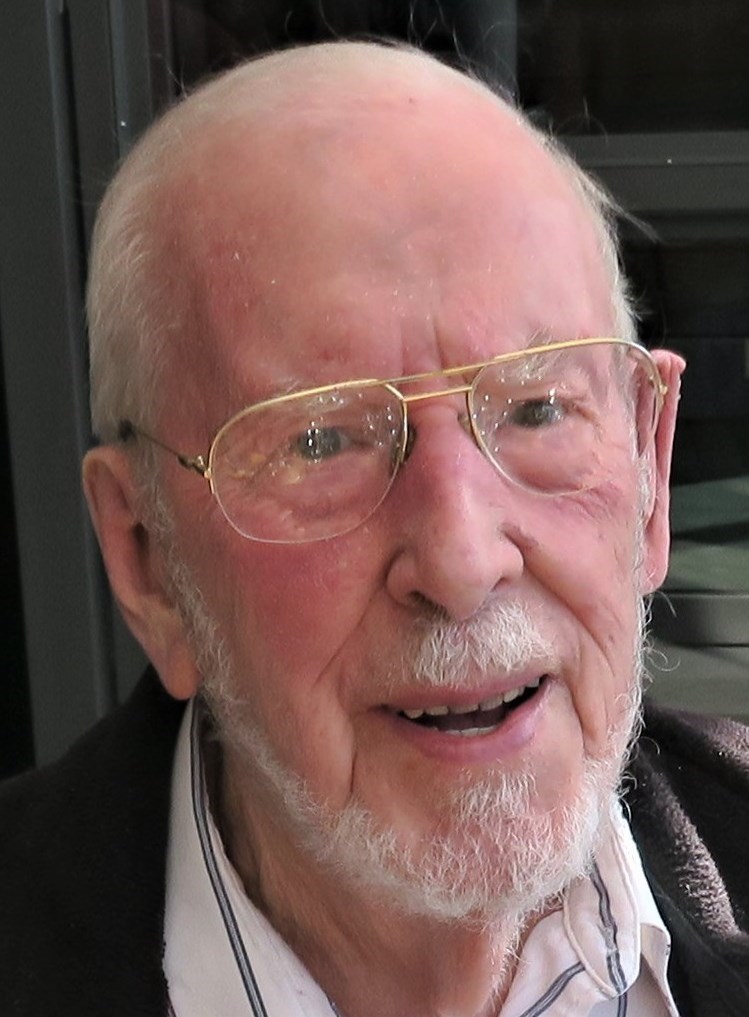 Among the scholars who have studied the Turkmens of Iran, the American anthropologist William Irons occupies a particularly interesting position.
Unlike historians who approached the Turkmens primarily through written documents, Irons conducted extended anthropological fieldwork among the Yomut Turkmen of northern Iran. His work examined Turkmen society from within: households, kinship, marriage, pastoralism, tribal organization, political authority, wealth, migration and relations with the state.
His research is especially valuable because much of it was conducted at a time when the traditional pastoral economy and social organization of the Yomut were undergoing rapid transformation.
William Irons
William Irons received his PhD in Anthropology from the University of Michigan in 1969.
His doctoral research focused on the Yomut Turkmen, particularly pastoral communities in northern Iran. He later returned to Iran for two additional studies of the Yomut, including a large demographic and economic survey.
Irons subsequently became Professor of Anthropology at Northwestern University, where his broader research developed toward evolutionary anthropology, behavioral ecology, demography, pastoral nomadism and the evolutionary study of human social behavior.
Nevertheless, the Yomut Turkmen remained an important part of his scholarship for several decades.
Fieldwork among the Yomut
Irons carried out his early fieldwork among Yomut communities on the Turkmen Sahra, east and southeast of the Caspian Sea in northern Iran.
This is particularly significant for the study of Iranian Turkmens.
The Turkmen population of this region was experiencing profound change. Nomadic and semi-nomadic pastoralism was increasingly giving way to sedentarization, agriculture and integration into the institutions of the Iranian state.
Irons therefore encountered communities in which older patterns of social organization were still observable but were already being reshaped.
This gave his research a partly historical character: he was not simply describing a static “traditional society,” but observing the consequences of a transition from one economic and political environment to another.
The Yomut Turkmen
His major ethnographic work was published in 1975 as:
The Yomut Turkmen: A Study of Social Organization among a Central Asian Turkic-Speaking Population
The book developed from his doctoral research and became his most substantial work devoted specifically to the Turkmen.
It is not primarily a general history of the Turkmens. Instead, it is an anthropological study of how Yomut society functioned.
Irons examined subjects including:
- ecology and pastoral economy
- nomadism and sedentarization
- descent groups and territorial groups
- tribal and political organization
- warfare and feud
- kinship
- household structure
- marriage
- inheritance
- bridewealth
- livestock and household wealth
- agricultural activity
- economic inequality
- mechanisms that limited the accumulation of wealth
One of the strengths of the book is the attempt to connect these different institutions.
Kinship, for example, is not treated simply as terminology describing relatives. Irons examines how descent and kinship influenced residence, political cooperation, marriage, economic activity and collective defense.
Kinship and Social Organization
Irons regarded kinship as one of the fundamental organizing principles of pastoral Yomut life.
The small communities in which pastoral families lived often consisted largely of relatives. Descent groups could provide frameworks for cooperation, political organization and collective action.
At the same time, Irons distinguished between descent groups and residential groups.
People who lived and migrated together did not necessarily belong to exactly the same lineage. A residential community might be dominated by one descent group while also including households belonging to others.
This distinction is important because it prevents an overly simple image of Turkmen tribal society as being organized exclusively by genealogy.
Actual social organization involved a combination of kinship, residence, economic cooperation and political necessity.
Nomadism as a Political Adaptation
Perhaps Irons’s best-known argument concerning the Yomut appeared in his 1974 article:
“Nomadism as a Political Adaptation: The Case of the Yomut Turkmen.”
Nomadism is often explained primarily in ecological terms: pastoralists move because livestock require seasonal access to water and pasture.
Irons proposed that this explanation was insufficient for the Yomut.
He observed that their pastoral economy could, under some circumstances, function with a more settled or semi-settled residence pattern. He therefore asked why highly mobile nomadism had historically persisted.
His answer emphasized politics and warfare.
Irons argued that mobility could increase military effectiveness. Communities capable of moving quickly were more difficult for enemies or states to control and could concentrate or disperse according to political circumstances.
In his interpretation, historical conflict — including feuding among Turkmen groups and confrontation with surrounding states — helped make nomadic mobility advantageous.
This was a significant argument because it treated nomadism not simply as an economic adaptation to an arid environment but also as a form of political organization.
It should, however, be understood as an anthropological interpretation rather than a universal explanation for Turkmen nomadism. Ecological, economic and political factors could all interact, and different Turkmen communities experienced different conditions.
Political Stratification
Irons was also interested in an apparent paradox.
Pastoral societies frequently developed substantial differences in livestock wealth, political influence and prestige. Yet Yomut society historically remained comparatively resistant to the emergence of a rigid hereditary class structure.
His 1971 article “Variation in Political Stratification among the Yomut Turkmen” examined differences in political organization between Yomut communities and changes over time.
He returned to the question more than twenty years later in “Why Are the Yomut Not More Stratified?”
This reflects one of the recurring questions in Irons’s work: how could significant economic inequality exist without necessarily producing a permanently stratified political system?
His research investigated mechanisms such as household organization, inheritance, marriage, pastoral risk and redistribution that could prevent inequalities from becoming permanently institutionalized.
The Yomut and the Basseri
Irons also compared the Yomut with another pastoral population of Iran, the Basseri.
In his 1972 study:
“Variation in Economic Organization: A Comparison of the Pastoral Yomut and the Basseri”
he used comparison to demonstrate that pastoral nomadism should not be treated as a single economic or social system.
Two societies could both depend heavily on livestock and mobility while developing different forms of economic organization, political authority and social structure.
This comparative approach is useful in Turkmen studies because it discourages the assumption that all nomadic societies are fundamentally alike.
Demography and Family Organization
Irons later returned to data he had collected among the Yomut and examined them through the emerging field of evolutionary anthropology.
His later publications included:
“Why Do the Yomut Raise More Sons than Daughters?”
and
“Yomut Family Organization and Demography.”
These works examined relationships between family structure, wealth, reproductive strategies and demographic patterns.
They represent a later phase of Irons’s intellectual career, when his Turkmen field data became part of broader debates about behavioral ecology and evolutionary explanations of human behavior.
These interpretations need to be read within the theoretical tradition in which they were written. Nevertheless, the demographic observations themselves provide another valuable source of information about Yomut households during the period of his research.
Why Irons’s Work Matters
For someone studying the Turkmens of Iran, Irons’s work is important for several reasons.
First, it is based substantially on direct fieldwork rather than exclusively on historical or administrative sources.
Second, it documents Yomut society during an important transitional period when nomadic pastoralism, tribal institutions and older economic arrangements were being transformed by settlement, mechanized agriculture and stronger integration with the modern state.
Third, Irons recorded social institutions that are difficult to reconstruct using conventional historical documents: household organization, kin relations, marriage practices, residence patterns, livestock ownership and everyday economic cooperation.
Finally, his work connects the Iranian Turkmens with broader anthropological questions concerning pastoral nomadism, tribal organization, political authority and social inequality.
Reading Irons Critically
Irons’s studies should not be treated as a complete description of “the Turkmen.”
His principal field research concerned Yomut communities in northern Iran, not every Turkmen tribe or every region inhabited by Turkmens.
The Yomut themselves were internally diverse, and the social structures observed in particular pastoral communities cannot automatically be generalized to Teke, Göklen, Ersari, Salor or other Turkmen populations.
Furthermore, anthropology of the 1960s and 1970s often sought relatively general theoretical explanations for social institutions. Some of Irons’s arguments — especially those concerning adaptation, warfare and later evolutionary theory — should therefore be compared with historical research, later ethnography and Turkmen-language scholarship.
The great value of his work lies not in treating it as a final explanation of Turkmen society, but in using it as a detailed ethnographic record that can be compared with other evidence.
Selected Works on the Turkmen
Irons, William. 1969.
The Yomut Turkmen: A Study of Kinship in a Pastoral Society. PhD dissertation, University of Michigan.
Irons, William. 1971.
“Variation in Political Stratification among the Yomut Turkmen.”
Anthropological Quarterly 44(3): 143–156.
Irons, William. 1972.
“Variation in Economic Organization: A Comparison of the Pastoral Yomut and the Basseri.”
In Perspectives on Nomadism, edited by William Irons and Neville Dyson-Hudson. Leiden: Brill.
Irons, William. 1974.
“Nomadism as a Political Adaptation: The Case of the Yomut Turkmen.”
American Ethnologist 1: 635–658.
Irons, William. 1975.
The Yomut Turkmen: A Study of Social Organization among a Central Asian Turkic-Speaking Population.
Anthropological Papers No. 58. Ann Arbor: University of Michigan Museum of Anthropology.
Irons, William. 1994.
“Why Are the Yomut Not More Stratified?”
In Pastoralists at the Periphery: Herders in a Capitalist World.
Irons, William. 2000.
“Why Do the Yomut Raise More Sons than Daughters?”
In Adaptation and Human Behavior: An Anthropological Perspective.
Irons, William. 2002.
“Yomut Family Organization and Demography.”
In The Biological Anthropology of Pastoral Nomads.
Sources & Further Reading
- William Irons, Northwestern University Department of Anthropology
- University of Michigan Museum of Anthropological Archaeology, The Yomut Turkmen
- William Irons, “Nomadism as a Political Adaptation: The Case of the Yomut Turkmen,” American Ethnologist, 1974
- Commission on Nomadic Peoples, International Union of Anthropological and Ethnological Sciences