30 September 2026
The Historical Origins of the Turkmens
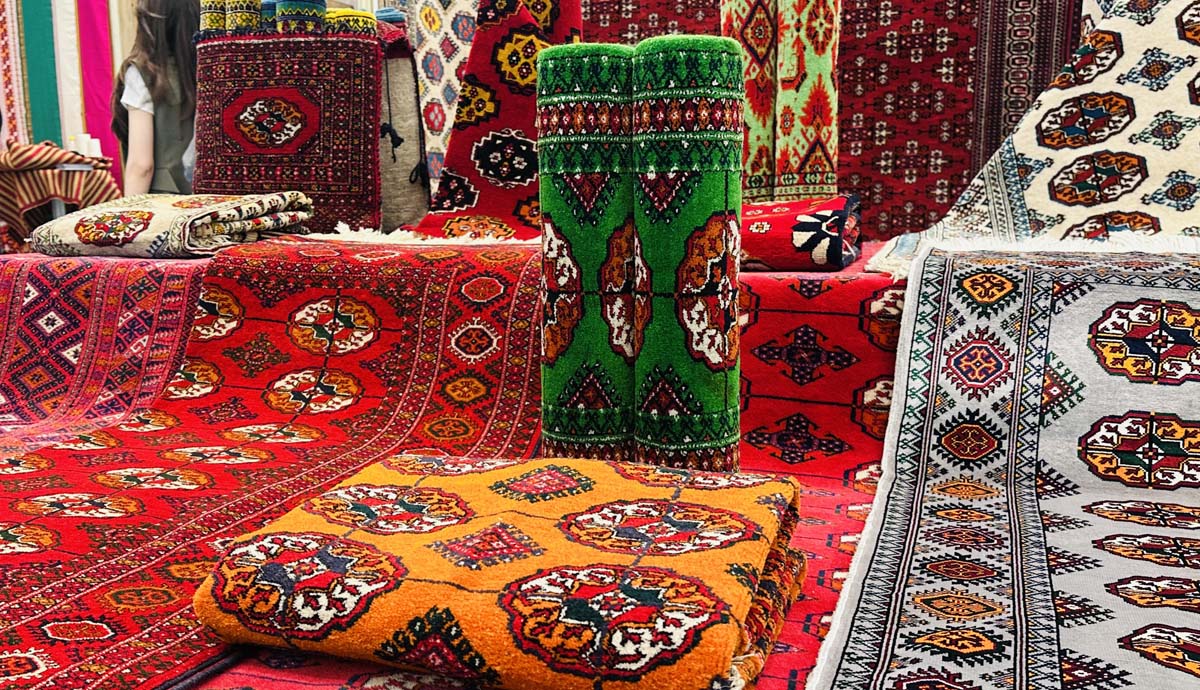 The history of the Turkmens cannot be understood simply by looking at the borders of modern Turkmenistan. Their historical roots belong to a much larger Eurasian story involving the Oghuz Turks, Central Asia, Khorasan, Iran, the Caspian region and, eventually, Anatolia and the Middle East.
It is also important to distinguish between the historical use of the words Oghuz and Turkmen and the modern ethnic identity represented by the Turkmen people today. These terms have changed in meaning over many centuries.
The Oghuz Background
The Turkmens belong linguistically and historically to the Oghuz branch of the Turkic peoples.
The name Oghuz appears in early Turkic historical sources in connection with tribal confederations. Groups bearing the Oghuz name are recorded in the early medieval Turkic world of Inner Asia, including the environment represented by the Old Turkic inscriptions.
During the following centuries, Oghuz groups gradually moved westward. By the early Islamic period, important Oghuz populations were established around the regions north and east of the Aral Sea and the Syr Darya.
This area became one of the major geographical stages in the later history of the Oghuz.
The Oghuz should therefore not be imagined as a single tribe moving together from one place to another. They consisted of changing tribal groupings and confederations whose political affiliations, territories and identities evolved over time.
Oghuz, Islam and the Name Turkmen
Beginning particularly around the tenth century, increasing numbers of Oghuz came into contact with the Islamic societies of Transoxiana and Khorasan.
Some important Oghuz ruling families converted to Islam. Among them was the family of Seljuk, whose descendants would profoundly transform the political history of Iran, Central Asia and the Middle East.
Islamic Persian and Arabic sources increasingly referred to some Oghuz populations as Turkmens.
The exact original meaning and etymology of the word Turkmen remain subjects of scholarly discussion. For this reason, it is risky to assume that every medieval use of the term had exactly the same ethnic meaning that it carries today.
In medieval sources, Turkmen could function as a broader designation connected with Oghuz populations.
The Seljuk Movement into Khorasan
One of the decisive events in Oghuz history was the movement of Seljuk-led groups southward into Khorasan during the eleventh century.
These migrations brought Oghuz groups into increasing conflict with the Ghaznavid state.
The Seljuk victory at the Battle of Dandanqan in 1040 established their dominance in Khorasan and opened the way for the rapid expansion of the Seljuk political order across Iran and farther west.
From this period onward, different Oghuz populations followed increasingly different historical paths.
Some moved westward through Iran toward Azerbaijan and Anatolia. Their descendants contributed to populations that would later develop into various western Oghuz-speaking communities, including the ancestors of modern Azerbaijani and Turkish-speaking populations.
Other Oghuz communities remained in Khorasan, around the Caspian and in Central Asian territories.
Toward a Distinct Turkmen Population
The ancestors of the modern Turkmens are associated particularly with Oghuz populations that remained in, or later occupied, regions east of the Caspian Sea and around the older Oghuz territories of Central Asia rather than participating completely in the great westward migrations.
Over many centuries these populations developed their own tribal structures, dialects, traditions and patterns of political organization.
The result was not the sudden birth of a new people at a single historical moment. Turkmen ethnogenesis was a long process.
Migration, tribal reorganization, warfare, pastoral economies, relations with neighboring Iranian and Turkic peoples, and changing political powers all contributed to the formation of the communities that we now identify as Turkmen.
The Turkmen Language
Modern Turkmen belongs to the Oghuz branch of the Turkic language family.
It is therefore historically related to Turkish, Azerbaijani and other Oghuz varieties, while possessing its own distinctive phonological, grammatical and lexical characteristics.
This linguistic relationship is one of the clearest surviving indications of the common Oghuz background of these peoples.
Yet linguistic kinship should not be confused with ethnic identity. Turkish, Azerbaijani and Turkmen identities developed through different historical processes despite their languages sharing an Oghuz origin.
Turkmens in Iran
Turkmen history is also an important part of the history of Iran and Khorasan.
Turkmen communities have long inhabited the northeastern Iranian and southeastern Caspian regions, forming part of a much wider cultural and geographical zone extending across the modern political frontier into Turkmenistan.
This means that the modern Iran–Turkmenistan border should not be projected backward onto earlier history.
For much of history, populations, tribes, livestock, trade routes and political powers moved across landscapes that were only much later divided by modern state boundaries.
The Turkmens of Iran are therefore not simply an isolated minority separated from Central Asian Turkmen history. They form part of the historical continuum of Turkmen populations around the southeastern Caspian and the wider Khorasan–Central Asian region.
A Necessary Terminological Distinction
One complication in studying this subject is the word Turkmen itself.
Historical sources use the term in several contexts. Furthermore, communities identified today as Turkmen exist in Iran, Turkmenistan, Afghanistan, Iraq, Syria, Turkey and elsewhere.
These populations do not necessarily represent branches of a single recent population.
For example, some communities historically called Turkmen in the Near East descend from medieval Oghuz migrations toward the west, whereas the modern Turkmen populations of Central Asia developed through a different historical trajectory.
For this reason, every use of the word Turkmen should be understood within its specific time, geography and historical context.
Understanding Turkmen History
The most useful way to approach Turkmen history is therefore not to search for a single moment when the Turkmens suddenly “appeared.”
Instead, their history can be understood as a sequence:
early Turkic confederations → Oghuz formations → westward migrations → Islamization and Seljuk expansion → regional differentiation of Oghuz populations → gradual development of distinct Turkmen communities and identity.
This approach also demonstrates why the study of the Turkmens naturally connects the histories of Central Asia, Iran, Khorasan, the Caspian world and the wider Turkic-speaking world.
Selected References
Bosworth, C. E. & Golden, Peter B.
“ḠOZZ.” Encyclopaedia Iranica.
Doerfer, Gerhard.
“Central Asia xiv. Turkish-Iranian Language Contacts.” Encyclopaedia Iranica.
Tulu, Sultan.
“Khorasan xxiii. Turkic Dialects of Khorasan.” Encyclopaedia Iranica.
Knüppel, Michael.
“Turkmens of Persia ii. Language.” Encyclopaedia Iranica.
Golden, Peter B.
“The Migrations of the Oğuz.” Archivum Ottomanicum, Vol. 4, 1972, pp. 45–84.
Golden, Peter B.
An Introduction to the History of the Turkic Peoples. Wiesbaden, 1992.